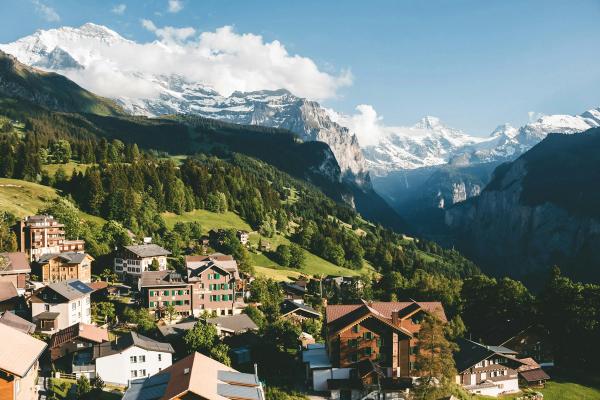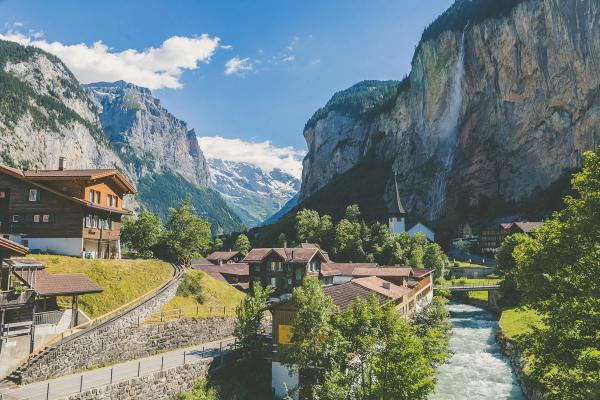

Zermatt sits at 1,620 metres at the head of the Matter Valley, with the Matterhorn rising to 4,478 metres directly above the village in a profile so geometrically clean it looks more like a symbol than a mountain. The village has been car-free since 1930 — only electric vehicles, horse-drawn carriages and the cogwheel railway operate within Zermatt itself. You reach it by train from Tasch, the last road-accessible station in the valley, approximately 12 minutes away. The absence of combustion engines gives the village a quietness unusual for a place this famous.
The mountain excursions from Zermatt are the reason most people come. Gornergrat, reached by rack railway to 3,089 metres, offers a panorama of 29 peaks including Monte Rosa — the second highest mountain in the Alps at 4,634 metres — and the full sweep of the Gorner Glacier. Matterhorn Glacier Paradise, the highest cable car station in Europe at 3,883 metres, sits on the Klein Matterhorn and looks directly across at the peak. Rothorn at 3,103 metres gives the best summer hiking access into the Valais Alps. The Mountaineers’ Cemetery in the old village records the climbers who died on the surrounding peaks, including the members of the first Matterhorn ascent party in 1865 — four of whom fell on the descent.
The village centre is a single main street (Bahnhofstrasse) running from the station toward the old village, lined with hotels, sports equipment shops and restaurants. Halal dining options are limited in Zermatt — the village is small and the restaurant scene is predominantly Swiss and European. Packed halal meals are the more reliable option for groups visiting on day trips. Zermatt is accessible year-round: summer for hiking and mountain excursions, winter for skiing on the Theodul Glacier which operates 365 days a year. The summer season from June to October gives the clearest mountain views and the most reliable excursion conditions.
Best time to visit
June to October for summer; December to March for skiing