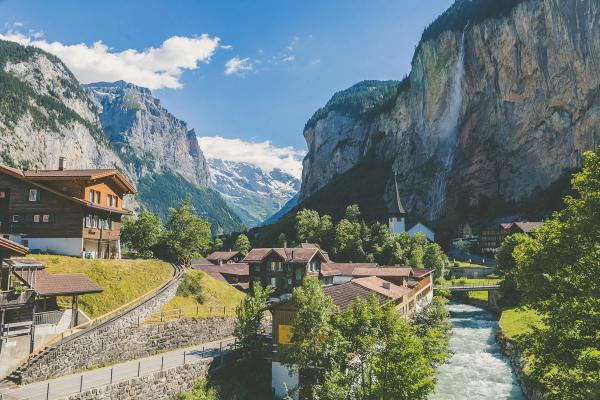

Grindelwald sits in a valley beneath the north face of the Eiger — one of the most recognisable mountain walls in the world — and has been drawing travellers since the 19th century, when Romantic-era tourists first made the journey up from Interlaken to see what all the altitude was about. The railway arrived in 1890. The views have not changed. What has changed is the infrastructure: Grindelwald is now the gateway to one of Europe's most extensive mountain transport networks, which means the peaks and glaciers that once required serious mountaineering are now accessible to anyone who can board a train.
The village itself is small and well-organised — a main street of timber hotels, sports shops, and bakeries running along the valley floor, with the Wetterhorn and Eiger rising on either side. In winter it connects into the Jungfrau ski region, one of the largest ski areas in the Alps. In summer the same lifts serve hikers heading up to the First plateau, the Bachalpsee lake, and the trails around the Grindelwald Glacier. The Jungfraujoch — the highest railway station in Europe at 3,454 metres — is a day trip from here, weather permitting.
Grindelwald is the kind of place that justifies a detour even within an already packed Switzerland itinerary. Two nights gives you one full mountain day and one valley day. Three nights means you can afford to wait out the clouds — and in the Alps, waiting for clear skies is always worth it. This is a destination for travellers who want the mountains to feel genuinely close, not decorative.
Best time to visit
December to March for skiing; June to September for hiking